Global demand for wearable thermoregulation is accelerating as heat extremes and cold snaps intensify, pushing importers to seek safer, smarter heated jackets and cooling vests. For 2026 (global scope), the value is clear: improved comfort, safety, and productivity across outdoor sports, industrial work, logistics, and defense. For importers of outdoor heated and cooling jackets, the winning play is aligning product portfolios to proven standards, materials, and power systems—while securing reliable OEM/ODM capacity.
 -
-
Why Thermoregulation Matters in 2026
The cooling fabrics market is expanding on the back of sportswear and protective apparel adoption. Publicly available analyses indicate growth from USD 2.4B in 2023 to USD 3.6B by 2028 at a 7.7% CAGR. While heated apparel is a more specialized segment, adjacent standards and materials point to mainstreaming in 2026. Importers should prioritize certified, testable performance over unverified claims.
Technology Trends: Heated Jackets & Cooling Vests
Advanced Heating Elements and Fabrics
Definition & status: Heated jackets now predominantly use carbon-fiber or graphene-based resistive elements laminated into breathable, flame-tested textiles. Comfort is quantified via thermal and moisture resistance, typically measured with the skin-model method per ISO 11092.
Drivers: Performance demands in cold weather, safer power architectures, and flammability compliance (e.g., 16 CFR Part 1610 in the US) push material innovation and robust labelling.
Data points: Temperature comfort ratings are determined using heated manikin tests and heat-loss models per ASTM F2732 referencing ASTM F1291. Peer-reviewed validation shows ASTM F2732 ratings align with human responses at common activity levels (PubMed).
Impact: Clear labels and standardized ratings reduce returns and accelerate approvals by distributors and insurers. Importers gain defensible marketing and compliance documentation.
Cooling Vests: PCM, Evaporative & Thermoelectric Hybridization
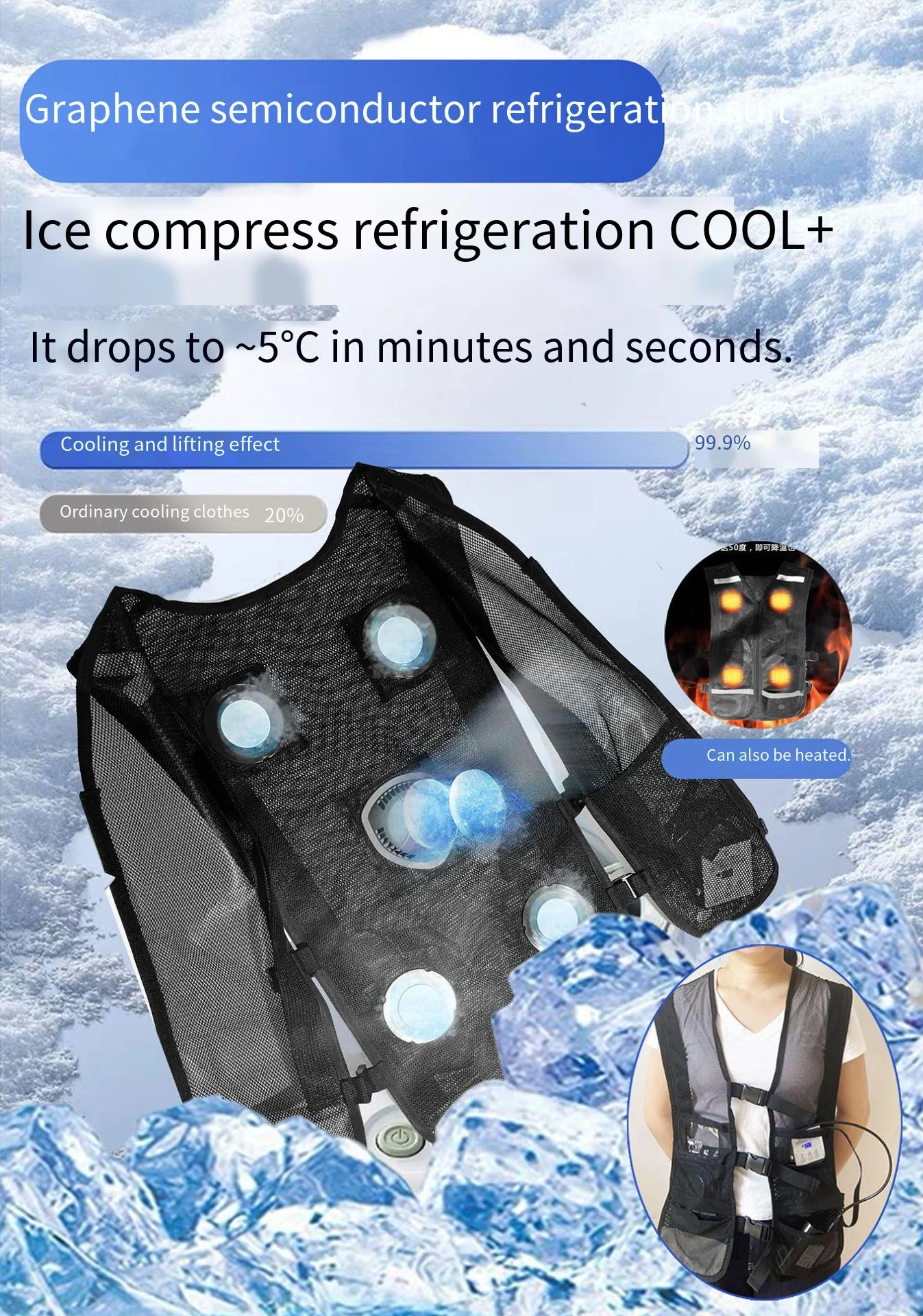
Definition & status: Cooling vests combine phase change materials (PCM), evaporative panels, or miniature thermoelectric (Peltier) modules with airflow channels. Cooling power is measured with a sweating heated manikin per ASTM F2371; physiological evaluations reference open-access literature.
Drivers: Workforce heat-stress management, sports performance and recovery, and stricter occupational guidelines encourage measurable, repeatable cooling outputs rather than subjective claims.
Data points: Studies show manikin-derived cooling power can overstate results relative to human tests, underscoring the need to interpret F2371 outputs alongside user trials (PMCID insights).
Impact: Hybrid designs (PCM + airflow or PCM + thermoelectrics) balance weight, duration, and comfort, enabling importer assortments for hot and humid climates.
Battery & Power: Safety, Logistics, and Runtime
Definition & status: Li-ion battery packs for heated apparel must follow global safety and transport norms. Cells and packs typically demonstrate compliance with IEC 62133-2:2017 and UN transport requirements (UN/DOT 38.3).
Drivers: Retail gatekeeping and carrier compliance; insurer and marketplace policies; and standardized charger ecosystems. Heating modules may reference UL 499 where applicable.
Data points: UN 38.3 requires eight transport tests (T1–T8), including altitude, vibration, shock, short-circuit and thermal tests (UNECE manual).
Impact: Verified safety unlocks cross-border distribution. Clear documentation reduces customs delays and carrier refusals—critical for seasonal fulfillment.
Certification Pathways: PPE Regulation & Flammability
Definition & status: In the EU, heated jackets and cooling vests often fall under PPE rules where intended for protective use. Compliance aligns to Regulation (EU) 2016/425 plus harmonized standards; in the US, apparel flammability follows 16 CFR Part 1610.
Drivers: Liability reduction, retail compliance audits, and institutional buyers requiring declarations of conformity.
Data points: EU PPE requires technical files, conformity assessment and CE marking with notified bodies where necessary (EU OSHA summary).
Impact: Consistent labelling and traceability enable scalable importer listings and tender participation.
Compliance Summary for Importers
| Region | Key Compliance | Standards & Tests | Notes |
|---|---|---|---|
| EU | PPE (if protective use), CE marking | EU 2016/425; flammability via apparel standards; battery IEC 62133-2; transport UN 38.3 | Technical file and DoC required; harmonized testing improves acceptance. |
| US | Flammability, electrical safety | 16 CFR 1610; heating modules may reference UL 499; batteries IEC 62133, UN/DOT 38.3 | Retailers often require documented test reports and labeling control. |
| Japan | PSE (DENAN) | METI PSE; JIS/IEC standards with Japanese deviations | Importer registration and mark use rules apply; EMC may be required. |
| Global Shipping | Battery transport | UN 38.3 test summary and documentation | Carrier acceptance hinges on complete UN 38.3 test summary. |
Data-Driven Outlook
Cooling textiles underpinning vest designs are forecast to grow (USD 2.4B in 2023 to USD 3.6B by 2028, 7.7% CAGR). Heated apparel demand correlates with improved battery safety and standardized labelling; wearable tech maturity continues to advance across industry Hype Cycles (Gartner).
Interpretation: With adjacent growth in cooling textiles, importers can expect complementary momentum in certified cooling vests. Heated apparel adoption hinges on battery safety and flammability compliance; expect steady runtime improvements via pack architecture and power budgeting.
Opportunities & Challenges
 -
-
- Opportunities: Certified, labeled performance; seasonal assortments for different climates; new industrial and logistics buyer segments; premium bundles with spare packs and chargers.
- Challenges: Battery transport documentation (UN 38.3); flammability labels; aligning manikin results with human trials; avoiding over-claiming cooling power; ensuring PSE/CE nuances.
- Mitigation: Adopt ASTM/ISO test plans, maintain IEC 62133 and UN 38.3 files, standardized garment labels, and retailer-ready technical packs.
Actionable Guidance
For Strategic Decision-Makers (Importers & CEOs)
- Prioritize suppliers with verified PPE/flam. compliance and IEC 62133 + UN 38.3 battery documentation.
- Build 2026 assortments around climate bands: PCM-first for humid heat, airflow/TE hybrids for dry heat, multi-zone heated jackets for cold snaps.
- Lock OEM/ODM capacity with seasonal buffers and dual-source batteries to de-risk peak demand.
For Tactical Managers (Product & QA)
- Specify test matrices: ASTM F2732 for heated jacket ratings; ASTM F2371 + user trials for cooling power; ISO 11092 for fabric comfort.
- Standardize labels and tech packs (materials, burn class, battery specs, runtime curves, care instructions).
- Audit transport readiness: UN 38.3 test summary included in every shipment file; charger and pack markings aligned to destination rules.
For General Readers
- Look for clear comfort ratings and battery safety marks; avoid products without documented standards.
- Match vest type to climate and activity; verify runtime and weight before purchase.
- Request test summaries from distributors for institutional use.
Value Realization with OEM/ODM
Dongguan Jumbao Electric Technology Co., Ltd provides global OEM/ODM capacity across smart appliances and thermoregulated apparel. The brand portfolio includes dual-function semiconductor cool/warm garments with adjustable ranges (about 5°C–50°C) and IoT-enabled quality control, backed by 15,000 m² factory space, SMT lines, and service to 200+ global customers. Learn more at jumbao888.com.
To tailor these trends to your portfolio and region, book an expert consultation or request a quotation.
References
- MarketsandMarkets: Cooling Fabrics Market (2023–2028) — global forecast and CAGR.
- ASTM F2732 — temperature ratings for cold-weather clothing; references F1291.
- ASTM F2371 — cooling power via sweating heated manikin; comparative analysis at PMCID.
- ISO 11092 — thermal and water-vapor resistance (skin model).
- EU Regulation 2016/425 — PPE conformity and CE rules.
- CPSC 16 CFR Part 1610 — flammability of clothing textiles.
- IEC 62133-2:2017 — Li-ion battery safety testing.
- UN 38.3 lithium battery transport tests — UNECE manual.
- UL 499 Electric Heating Appliances — product-safety scope.
- Japan PSE (METI) — electrical safety and marking.
- Gartner Research — technology maturity and decision frameworks.